
Anxiety
Worry that never quite switches off, treated with practical CBT so your days feel steadier.
Sioux Falls and Rapid City sit most of a day's drive apart, so families, children, and adolescents can stay close to home for sessions with our psychologist, and so can couples, adults, and seniors.
Currently accepting new clients
Request a South Dakota appointmentReaching a psychologist in a state this large and thinly settled can mean two hundred miles of highway and a whole day gone. That arithmetic is why people here put care off, and it is the specific problem a video appointment solves. We see young children, teenagers, adults, and couples located across South Dakota, as well as families and older adults who prefer not to travel from towns like Aberdeen or Spearfish. An appointment costs an hour rather than a day, which is often the difference between starting treatment and leaving it another season.
Weather compounds distance. A January storm can close the road you would have driven, and in a weekly course of therapy that means a gap of a week or more each time the wind gets up. From your own house, the schedule holds steady for a retiree or a busy parent. What you need is a door that shuts, a connection that carries video, and to be within South Dakota as the hour opens, because that is what the psychologist's authorization depends on.
Listed below are the concerns we are asked about most from South Dakota. Whether a video format suits your situation is something to decide with the clinician rather than in advance.
Long winters and long distances can make a low stretch more isolating than it needs to be. Treatment works on activity, sleep, and contact with other people, and on the thinking that talks you out of all three.
Persistent worry is examined for what feeds it, and avoidance is unwound in steps small enough to manage. Physical symptoms such as a racing heart, a tight chest, and broken sleep are addressed directly.
Losing a spouse, a parent, or a place that has been in the family for generations changes the shape of a life. Sessions hold that without hurrying anyone toward a tidy resolution.
Difficulty falling asleep or staying asleep is treated behaviorally, with attention to schedule, light, worry at bedtime, and the habits that build up around shift work or a very early start.
Work on drinking or drug use looks at the circumstances that reliably precede it and at what would have to change for a different choice to be realistic. Family members affected by it are welcome too.
Parents talk through discipline that has stopped working, a child's refusal to go to school, and the disagreements between adults that children quietly organize themselves around at home.
Whether you meet us by secure video or in person at our Flagstaff office, these are the concerns we most often help with.
Worry that never quite switches off, treated with practical CBT so your days feel steadier.
Low mood that drains interest and energy, met with patient, structured care that rebuilds one step at a time.
Careful, paced work for difficult experiences, with you in control of what you share and when.
Clear testing when you need answers, and practical coaching for the schedules and habits that follow.
Support through the first years on your own: school, work, independence, and the relationships that come with them.
For professionals running on empty: therapy for the exhaustion, and coaching for the work habits underneath it.
We are unhurried, and we say plainly what therapy is likely to do and what it will not. Whether treating individual adults, corporate professionals, college students, or entire families, treatment here gets planned with the calendar and the weather in view: appointments that can move, and a way to reach the office when a road or a signal fails. Our work relies heavily on Cognitive Behavioral Therapy (CBT), adapted to your specific circumstances rather than applied as a generic formula. Because we do not offer a quick fix, goals written down early let you judge progress over the months instead of taking our word for it. Where a client needs a local physician, a prescriber, or a service that has to happen face to face, the clinician helps identify one rather than working around the gap indefinitely.
One psychologist carries the South Dakota work, so there is no handoff from an intake worker to a therapist and no need to tell your history twice to two different people.
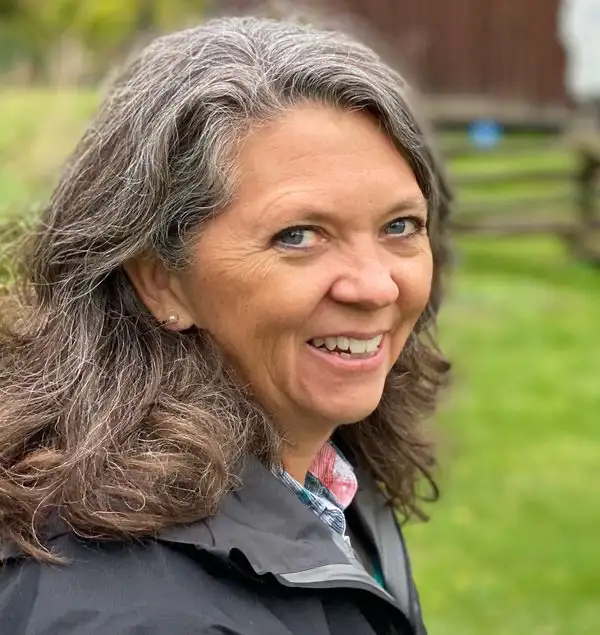
Clinical Director · Bilingual Clinical Psychologist
Dr. Lusk holds the Authority to Practice Interjurisdictional Telepsychology (APIT™) granted by the PSYPACT® Commission, which authorizes her to provide telepsychology to clients located in South Dakota.
South Dakota clients are seen by Della S. Lusk, Ph.D., a bilingual licensed clinical psychologist who has practiced for more than twenty-five years and directs this practice. Her work here includes individual therapy, sessions with couples, and family meetings; she also conducts psychological evaluations, and testing that cannot be given by video takes place at our Flagstaff office. Her doctoral training in clinical psychology was completed in an APA-accredited program, and her undergraduate degree is an A.B. from Smith College.
Request an appointmentFull biographies, training, and areas of expertise are listed on our providers page. You can also read Dr. Lusk’s licensure and credentials in full. You are welcome to ask any clinician directly about their qualifications and experience.
South Dakota is a participating state under PSYPACT®, an interstate agreement covering telepsychology. Dr. Lusk holds interjurisdictional authority through it, and that is the basis on which she can treat someone sitting in Spearfish or Sioux Falls without either party driving anywhere. The agreement concerns how far a psychologist may practice beyond her own state, not where in South Dakota a client happens to live, and it is nothing like a local registration.
Because the agreement follows your location, an appointment assumes you are within South Dakota when it begins. A run into Minnesota or Wyoming on the day of a session changes that, so tell us beforehand and we will move the hour or explain the options. If you are relocating, mention it early: continuing depends on whether the new state participates, and where it does not, a session gets used to arrange a referral properly.
Participating jurisdictions are published by the compact commissions and can change. You can review current psychology participation at psypact.gov, find the relevant psychology licensing board through the PSYPACT® board directory, or check counseling privileges at CompactConnect. If you are not sure which applies to you, call (844) 774-7997 and we will confirm before you schedule.
The state's institutions are relatively few, and our clients include students and staff from either column: the University of South Dakota, South Dakota State University, and the smaller public campuses, together with Augustana University and the University of Sioux Falls. Video keeps care steady through a semester and through a summer spent back at home.
Sessions reach Sioux Falls, Rapid City, Aberdeen, Brookings, Vermillion, and Spearfish, and ranches and small towns a long way from any of them. Distance is why most people here try telehealth at all; privacy at your end is the only real requirement.
For most of the concerns described above, yes. Talking therapy by video is a reasonable way to do the work, and for someone facing a four-hour round trip it is the difference between weekly sessions and none at all. Some evaluations and some medical situations do require a person physically present, and the clinician will tell you when yours is one of them.
It happens, and it need not cost you the appointment. At the beginning of care the clinician takes a telephone number to use if the video fails, and the office can reschedule when a whole day is lost to weather. Across a course of treatment we would much rather move an hour than let a month slide by untreated.
Yes. Students come to us when a campus service is stretched thin, when they would rather see someone unconnected to their program, or when they want care that continues after they leave the state. Staff and faculty use the practice for privacy as much as for convenience, particularly where the counseling office is well known to everyone.
Records are confidential, and nothing goes to a physician, a school, or an employer without your consent, apart from the narrow legal exceptions your clinician will explain at the outset. There is also no local waiting room in which to be recognized, which for many clients in small communities is the practical point of all this.
Our rates are sent in a fee agreement when you schedule an appointment. Start with the telephone: (844) 774-7997, or use info@psychotherapy.com if writing suits you better. The office takes a short history, answers whatever you ask about fees before anything is booked, and offers times. If this practice is not the right fit for what you describe, staff will tell you so during that call instead of scheduling you anyway.
Request a first appointment in our secure online scheduler at a time that works around your drive, your shift, or the forecast. The office will confirm how the video sessions run and send the fee agreement.
Prefer to talk first? Call or email the office.
Alabama Alaska Arizona Arkansas Colorado Connecticut Delaware District of Columbia Florida Georgia Hawaii Idaho Illinois Indiana Kansas Kentucky Louisiana Maine Maryland Michigan Minnesota Mississippi Missouri Montana Nebraska Nevada New Hampshire New Jersey North Carolina North Dakota Ohio Oklahoma Pennsylvania Rhode Island South Carolina Tennessee Texas Utah Vermont Virginia Washington West Virginia Wisconsin Wyoming


