
Anxiety
Worry that never quite switches off, treated with practical CBT so your days feel steadier.
In North Dakota the highway and the weather should not decide whether you get care, so our psychologist sees children, adolescents, and their families by secure video, along with adults, couples, and seniors.
Currently accepting new clients
Request a North Dakota sessionDistance shapes mental health care in North Dakota more than most things do. A weekly appointment that requires a long drive in each direction tends not to stay weekly, and from late fall through spring the condition of the road can decide the matter for you. Telehealth removes that calculation altogether. The hour happens where you already are: at a kitchen table in Dickinson, in an office in Bismarck, in a parked vehicle on a break if that is the only private place to be found.
The people we see here include ranchers, teachers, nurses, tradespeople, adolescents, and older adults in later life. They come as individuals, as couples working to repair a marriage, or as parents looking for help with a child's behavior or worry, and we also meet with families facing strain at home. Continuity is what this format protects best. Someone who spends part of the winter elsewhere, or who takes a job in Minot after years in Jamestown, does not have to start over with a new clinician.
These are the areas of work people in North Dakota ask us about most, and each can be carried out entirely through secure video.
After a death, a diagnosis, or the end of something that organized your life, we make room for grief without hurrying it, and help with the practical decisions that come afterward.
For people whose temper has cost them at home or at work, sessions focus on the physical build-up, the thinking that fuels it, and specific alternatives rehearsed until they are genuinely available.
Parents come to work on a child's behavior, a household that has stopped functioning, or the divide between two adults raising children differently, sometimes with the children joining for part of it.
Living with pain or a long illness changes sleep, mood, and what a person believes is still possible. We work alongside your medical care on coping, pacing, and the fear that accompanies symptoms.
Whether you are early in recovery, worried about slipping, or worn down by someone else's drinking, we look at the patterns holding it in place and what maintaining a change actually requires.
Children and teenagers are seen at their own developmental level, with parents kept appropriately involved, for worry, low mood, school refusal, behavior at home, and the aftermath of difficult events.
Whether you meet us by secure video or in person at our Flagstaff office, these are the concerns we most often help with.
Worry that never quite switches off, treated with practical CBT so your days feel steadier.
Low mood that drains interest and energy, met with patient, structured care that rebuilds one step at a time.
Careful, paced work for difficult experiences, with you in control of what you share and when.
Clear testing when you need answers, and practical coaching for the schedules and habits that follow.
Support through the first years on your own: school, work, independence, and the relationships that come with them.
For professionals running on empty: therapy for the exhaustion, and coaching for the work habits underneath it.
We begin with a careful evaluation to ensure we understand your circumstances accurately. With North Dakota clients, we pay special attention to the time between meetings, because local supports close to home may be few. We discuss what to do on a difficult evening and how the plan holds up when weather or a shift change knocks a week out of the schedule. We incorporate Cognitive Behavioral Therapy (CBT) into our work with families, academics, and professionals to build practical skills. Meaningful progress requires patience, and we do not offer a quick fix. Our unhurried pace allows adults and students to develop lasting coping strategies, and we regularly review our approach with you to ensure therapy remains a grounded, helpful part of your routine.
Dr. Della S. Lusk, Clinical Director of the practice, sees every North Dakota client herself. For people who have had to change providers each time one left the area, that consistency is often the point.
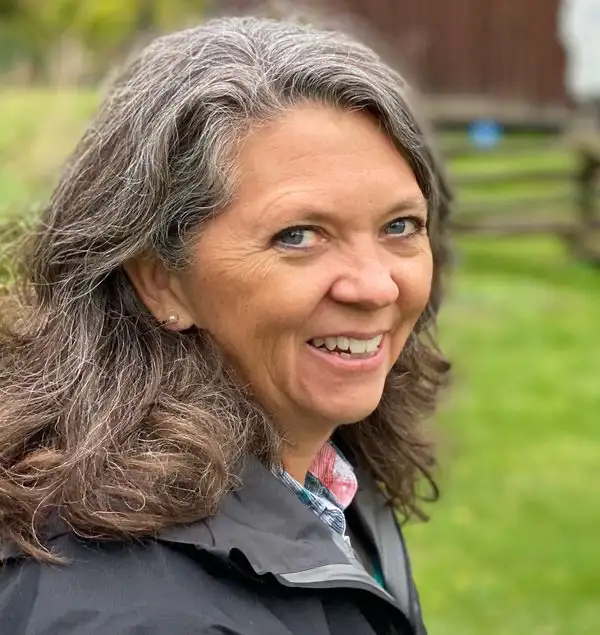
Clinical Director · Bilingual Clinical Psychologist
Dr. Lusk holds the Authority to Practice Interjurisdictional Telepsychology (APIT™) granted by the PSYPACT® Commission, which authorizes her to provide telepsychology to clients located in North Dakota.
Dr. Lusk has practiced for more than 25 years as a Licensed Clinical Psychologist and is bilingual in English and Spanish. She completed her undergraduate work at Smith College and earned her doctorate at the California School of Professional Psychology–San Diego, an APA-accredited doctoral program. She practices under the Authority to Practice Interjurisdictional Telepsychology from the PSYPACT® Commission and offers individual, couples, family, and group therapy. Psychological evaluation is part of her work too, with in-person testing at our Flagstaff office.
Request an appointmentFull biographies, training, and areas of expertise are listed on our providers page. You can also read Dr. Lusk’s licensure and credentials in full. You are welcome to ask any clinician directly about their qualifications and experience.
It is, by way of PSYPACT®. The compact lets a psychologist licensed in one member state practice telepsychology with residents of the others, and this state is a member. Dr. Lusk works under the Authority to Practice Interjurisdictional Telepsychology issued by the PSYPACT® Commission on the basis of her Arizona license. Which states take part can change, and the Commission keeps the authoritative page at psypact.gov if you would like to confirm it yourself.
One condition governs everything else: the authorization attaches to wherever you physically are while the session runs. Sitting in Grand Forks, you are covered. Sitting in a state that has not joined the compact, whether on a long trip or staying with family for part of the winter, you are not, even though nothing about your care has changed. That is why we ask each time. When you expect to be away, let us know ahead of the appointment and we will sort out the schedule.
Participating jurisdictions are published by the compact commissions and can change. You can review current psychology participation at psypact.gov, find the relevant psychology licensing board through the PSYPACT® board directory, or check counseling privileges at CompactConnect. If you are not sure which applies to you, call (844) 774-7997 and we will confirm before you schedule.
We also see students, staff, and faculty at colleges and universities in the state, among them the University of North Dakota, North Dakota State University, Minot State University, and the University of Jamestown. A student who leaves Fargo for a summer job or a practicum elsewhere can keep the same standing appointment, subject to the location rule described above.
Most of the clients we see in this state live in Fargo, Grand Forks, Bismarck, Minot, Jamestown, or Dickinson, though nothing limits us to those cities. Anyone in North Dakota with a private space and a usable connection can be seen.
It is, and rural distance is the circumstance this format suits best. Nothing about the session depends on your being near an office; the hour is the same hour whether you are in town or well outside it. What it does ask for is somewhere you can speak without being overheard and a connection good enough to carry video. When the connection is poor, we switch to the telephone and keep going.
That is precisely the advantage of meeting this way. Since you are not driving to us, weather that would cancel an in-person visit usually has no effect on a video appointment. Winter is the hardest stretch of the year for a good many people, with short days and less contact with others, and it is unfortunate timing that travel is worst then too. Holding the weekly hour through those months often matters most.
Yes. We see couples and families as well as individuals, and a video appointment can include people sitting in different places, which helps when an adult child or a co-parent lives elsewhere, provided each participant is somewhere the authorization covers. Some families begin with the parents alone, and we decide together when and how to bring a child into the conversation.
Tell us during a session what the hard moments look like, and part of the plan will be about exactly that: what to do, in what order, and whom you would reach out to. Contact with the office between appointments is for scheduling and brief practical matters rather than for treatment. We would not want a difficult week to go unmentioned, so we ask about it directly next time.
Our rates are sent in a fee agreement when you schedule an appointment. Call (844) 774-7997 or email info@psychotherapy.com and describe the situation in a few sentences. The office goes over any out-of-network questions with you before the first appointment is scheduled, so you know where you stand before anything begins. If you would rather write than talk at the outset, email is perfectly fine with us.
Getting started takes one request in our secure online scheduler, at a time that works around your job and the season. Questions about fees are handled by the office before your first appointment.
Prefer to talk first? Call or email the office.
Alabama Alaska Arizona Arkansas Colorado Connecticut Delaware District of Columbia Florida Georgia Hawaii Idaho Illinois Indiana Kansas Kentucky Louisiana Maine Maryland Michigan Minnesota Mississippi Missouri Montana Nebraska Nevada New Hampshire New Jersey North Carolina Ohio Oklahoma Pennsylvania Rhode Island South Carolina South Dakota Tennessee Texas Utah Vermont Virginia Washington West Virginia Wisconsin Wyoming


