Anxiety
Worry that never quite switches off, treated with practical CBT so your days feel steadier.
In West Virginia, where distance is measured in hours of winding road, our psychologist sees adults and couples by secure video, and families too, whether the worry is about children, adolescents, or seniors.
Currently accepting new clients
Request a West Virginia appointmentFor many households in West Virginia, the nearest psychologist who does the particular work you need is not in the next town. The trip from Beckley or Shepherdstown can take two hours of mountain road each way, and when the same drive has to be made weekly, most people decide against starting. A secure video appointment removes the road entirely. Our clients here include young children with a parent nearby, teenagers, working adults, couples, whole families, and older adults living in Charleston, Wheeling, or Huntington.
Specialty care makes the point most sharply. General counseling may be available close by while psychological evaluation, or experience with a specific marital, childhood, or late-life concern, sits several counties away. Working over video widens the choice without lengthening the journey, and it keeps an appointment intact in weather that would have closed a road. Your part of the arrangement is privacy at your end and being inside West Virginia when the session opens.
Below are six areas of frequent work with West Virginia clients. What suits a remote format, and what genuinely needs a room, is something the clinician will tell you straight.
Persistent pain, headache, and long-term illness carry their own psychological weight: broken sleep, lost work, a shortened temper. Therapy addresses that alongside your medical treatment rather than in place of it.
Treatment for a long low stretch begins with the mechanics of a day, from waking and eating to seeing anybody at all, and then takes up the self-judgment that has hardened into apparent fact.
Work on substance use is concrete: what precedes it, what it accomplishes, and what would need to be in place for a different decision. Relatives whose lives have been reshaped by it are seen too.
Anxiety is treated by finding the loop that sustains it and interrupting that loop in agreed steps, with attention to the bodily symptoms which convince people something is medically wrong.
Bereavement, a terminal diagnosis in the family, and the exhaustion of caring for someone who is dying are all proper subjects for these hours, without any push toward tidy resolution.
An accident, an assault, or sustained harm in childhood can keep a nervous system on alert for years afterward. The early work is stabilization; the events themselves are taken up only when you are ready.
Whether you meet us by secure video or in person at our Flagstaff office, these are the concerns we most often help with.
Worry that never quite switches off, treated with practical CBT so your days feel steadier.
Low mood that drains interest and energy, met with patient, structured care that rebuilds one step at a time.
Careful, paced work for difficult experiences, with you in control of what you share and when.
Clear testing when you need answers, and practical coaching for the schedules and habits that follow.
Support through the first years on your own: school, work, independence, and the relationships that come with them.
For professionals running on empty: therapy for the exhaustion, and coaching for the work habits underneath it.
We work steadily and we say what we think. Across our work with individual adults, business professionals, academics, and families, our main approach centers on Cognitive Behavioral Therapy (CBT). Goals are agreed at the beginning and reviewed frankly over the months, as we do not offer a quick fix. Where progress has stalled, we would rather change the plan or finish the work than continue out of habit. With clients here we also talk about what is available locally, because some things, including a prescriber, a medical assessment, or an in-person service, have to be arranged where you live. Naming that at the start is far more useful than discovering it three months in.
Work with clients in this state is done by Dr. Lusk herself, from the first appointment onward, which spares you the common experience of explaining everything twice to two different people.
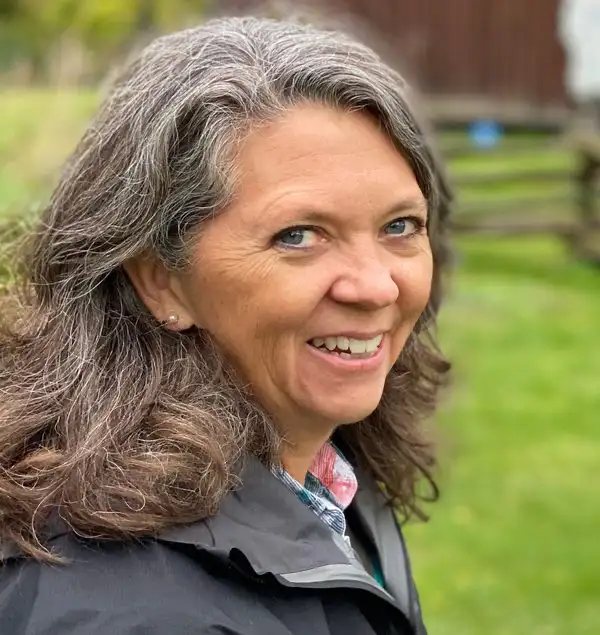
Clinical Director · Bilingual Clinical Psychologist
Dr. Lusk holds the Authority to Practice Interjurisdictional Telepsychology (APIT™) granted by the PSYPACT® Commission, which authorizes her to provide telepsychology to clients located in West Virginia.
Our clinical director, Della S. Lusk, Ph.D., has practiced clinical psychology for more than twenty-five years as a licensed psychologist. She sees West Virginia clients for individual therapy, for couples and family sessions, and for groups. She also conducts psychological evaluation covering educational and neuropsychological questions, with any in-person testing held at our Flagstaff office. Her undergraduate degree is from Smith College and her doctorate from an APA-accredited program in clinical psychology.
Request an appointmentFull biographies, training, and areas of expertise are listed on our providers page. You can also read Dr. Lusk’s licensure and credentials in full. You are welcome to ask any clinician directly about their qualifications and experience.
West Virginia participates in PSYPACT®, the interstate agreement for telepsychology, and Dr. Lusk holds the interjurisdictional authority granted under it by the compact's commission. That single credential is what allows her to treat a client in Beckley or Wheeling from an office in Flagstaff, and it takes away the question of which local practice happens to have a psychologist on staff this year.
The obligation that comes with it is easy enough to meet: the appointment has to find you inside West Virginia. A day over the line in Ohio, Virginia, or Pennsylvania means telling the office first, so that we can move the hour or confirm that the other state participates as well. A move is worth mentioning early, since whether the work continues depends on where you are going.
Participating jurisdictions are published by the compact commissions and can change. You can review current psychology participation at psypact.gov, find the relevant psychology licensing board through the PSYPACT® board directory, or check counseling privileges at CompactConnect. If you are not sure which applies to you, call (844) 774-7997 and we will confirm before you schedule.
We see students, faculty, and staff from West Virginia University, Marshall University, Shepherd University, Fairmont State University, and Concord University, and from private institutions including West Virginia Wesleyan College, Bethany College, and the University of Charleston. For students from small towns, video also keeps the work going through a summer spent at home.
Clients join from Charleston, Morgantown, Huntington, Wheeling, Beckley, and Shepherdstown, and from small communities a long drive from any of them. A private room and a workable connection are the only requirements at your end of it.
For therapy it generally can, and for a good many people it is the only version of the work that proves sustainable week after week. Where an evaluation or a medical question requires somebody in the room, that has to happen locally, and Dr. Lusk will name it plainly and help you work out where, rather than stretch the format.
Yes, so long as a parent or guardian joins the consent process and helps set the goals. Your clinician explains, before the work begins, what she keeps between herself and the adolescent and what parents are told, because a teenager who does not understand that arrangement will make no real use of the sessions.
Dr. Lusk conducts them, including educational, forensic, employment screening, and neuropsychological assessment. What your referral question actually requires is decided with her in consultation, as is how much of it might be done remotely. We will not assert that a given assessment suits a video format when it does not.
Not from us. What you say is confidential, subject only to the narrow legal exceptions your clinician sets out in the first session, and there is no local office for anyone to watch you walk into. Contact with a doctor, a school, or a workplace happens only on your written permission, and you are asked first.
Telephone (844) 774-7997, or write by email to info@psychotherapy.com, and the office will take it from there: a few questions about the situation, an explanation of how fees are handled before you agree to anything, and a set of appointment times to choose between. Nothing is booked until you have what you need.
Request a first appointment in our secure online scheduler at an hour you could reliably keep. The office reviews every request and will tell you if this practice is not a sensible fit for what you describe.
Prefer to talk first? Call or email the office.
Alabama Alaska Arizona Arkansas Colorado Connecticut Delaware District of Columbia Florida Georgia Hawaii Idaho Illinois Indiana Kansas Kentucky Louisiana Maine Maryland Michigan Minnesota Mississippi Missouri Montana Nebraska Nevada New Hampshire New Jersey North Carolina North Dakota Ohio Oklahoma Pennsylvania Rhode Island South Carolina South Dakota Tennessee Texas Utah Vermont Virginia Washington Wisconsin Wyoming