Anxiety
Worry that never quite switches off, treated with practical CBT so your days feel steadier.
When the nearest clinic is a winter's drive away, Idaho seniors can stay home, couples and families can sit together, and adults, children, and adolescents can talk with our psychologist by video.
Currently accepting new clients
Request an Idaho appointmentDistance in Idaho is not an abstraction, and it often decides who can keep a weekly hour. We work with parents arranging care for a child in Twin Falls, adolescents in Pocatello, college students in Moscow, and older adults in Idaho Falls for whom reaching a psychologist would mean a day given over to driving, and rather more than that once snow is on the roads. Psychological care by secure video means that travel is no longer the thing deciding whether your family's treatment happens at all.
Continuity matters just as much when work or family moves you between Boise and Coeur d'Alene, or when a couple in Caldwell needs a shared hour without two separate commutes. It also helps if life takes an adult into another participating state for a season. The rule is the same in every case: authorization follows the room you are sitting in during the session, not the town on your mail. Let us know before your location changes and the schedule can usually be arranged around it rather than interrupted by it.
The concerns below come up most often with Idaho clients. Every one of them is treated under a personalized plan, agreed with you before the weekly work begins.
Worry that has begun to set a household's routine is treated with graded practice and with attention to the predictions driving it. We settle on a pace that a busy week can actually accommodate.
Low mood often presents as exhaustion or as gradual withdrawal rather than as named sadness. Sessions restore activity and sleep, then examine the conclusions that a long flat stretch has quietly drawn.
Adults never assessed as children commonly struggle with planning and follow-through, and often with the self-criticism that trails years of near misses. The work builds systems that survive a real week, with diagnostic clarity where that would help.
Some of the most useful hours are the ones a parent attends without the child. We look at what the evening routine actually is, and at how two adults can arrive at one response before the next hard night.
Anger that arrives faster than thought is treated as a sequence that can be slowed, not as a verdict on character. We practice the pause in the situations that usually skip it.
Where a school or a referring clinician wants more than an impression, an evaluation answers a defined question. What suits a remote format is determined with Dr. Lusk rather than assumed beforehand.
Whether you meet us by secure video or in person at our Flagstaff office, these are the concerns we most often help with.
Worry that never quite switches off, treated with practical CBT so your days feel steadier.
Low mood that drains interest and energy, met with patient, structured care that rebuilds one step at a time.
Careful, paced work for difficult experiences, with you in control of what you share and when.
Clear testing when you need answers, and practical coaching for the schedules and habits that follow.
Support through the first years on your own: school, work, independence, and the relationships that come with them.
For professionals running on empty: therapy for the exhaustion, and coaching for the work habits underneath it.
We take a deliberately measured approach, as a sustainable pace produces more lasting results than a compressed schedule. With Idaho families, adults, and students, the treatment plan takes winter travel, ranch operations, shift schedules, and the length of a school run as facts to build around rather than inconveniences to argue with. We establish diagnostic clarity first, then introduce Cognitive Behavioral Therapy (CBT) to help you develop practical, long-term coping strategies. Goals are written down, and progress is reviewed aloud at regular intervals so you always understand the direction of our work. We do not offer a quick fix, preferring instead to spend several months meeting weekly to ensure the skills you learn are deeply integrated into your daily routine.
Idaho clients work with Della S. Lusk, Ph.D., our Clinical Director, who provides psychological services right across the lifespan and to couples and families alike.
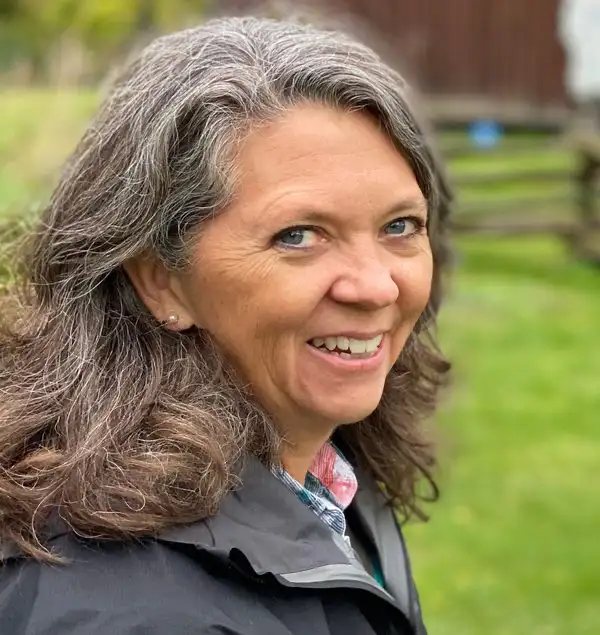
Clinical Director · Bilingual Clinical Psychologist
Dr. Lusk holds the Authority to Practice Interjurisdictional Telepsychology (APIT™) granted by the PSYPACT® Commission, which authorizes her to provide telepsychology to clients located in Idaho.
Dr. Lusk has practiced psychology for more than twenty-five years and is bilingual in English and Spanish. Her A.B. was taken at Smith College, her doctorate in the APA-accredited program at the California School of Professional Psychology–San Diego. Idaho clients come to her for individual therapy, for couples and family work, and for groups; she also conducts psychological evaluations, and testing that requires an examiner in the room is scheduled at our Flagstaff office.
Request an appointmentFull biographies, training, and areas of expertise are listed on our providers page. You can also read Dr. Lusk’s licensure and credentials in full. You are welcome to ask any clinician directly about their qualifications and experience.
Idaho takes part in PSYPACT®, the interstate agreement for telepsychology. The credential Dr. Lusk works under is the Authority to Practice Interjurisdictional Telepsychology (APIT™), issued by the PSYPACT® Commission, and it is that rather than an Idaho-issued license which allows her to treat someone here from an office in Flagstaff. The Commission keeps the roster of participating states, and it is the place to settle any question about where matters currently stand.
For scheduling purposes, the point to hold onto is that the credential attaches to you, or more precisely to where you are. An Idaho client spending a fortnight at a job site in another state is, for those hours, somewhere else, and what is permitted depends on the rules there. Tell the office about trips before they start and about a move as soon as it is decided, and we will say plainly whether the sessions can carry on unchanged.
Participating jurisdictions are published by the compact commissions and can change. You can review current psychology participation at psypact.gov, find the relevant psychology licensing board through the PSYPACT® board directory, or check counseling privileges at CompactConnect. If you are not sure which applies to you, call (844) 774-7997 and we will confirm before you schedule.
The campuses we hear from include Boise State University, the University of Idaho, Idaho State University, Lewis-Clark State College, the College of Idaho, Northwest Nazarene University, Brigham Young University-Idaho, and New Saint Andrews College. Where a campus is small, outside care can be the difference between speaking freely and being overheard.
Appointments come from Boise, Moscow, Idaho Falls, Pocatello, Coeur d’Alene, Caldwell, and Twin Falls, and from smaller places with no listing at all. A room that can be closed and a connection that holds are the only requirements.
Young children through to adults in their later years, and couples and families besides. Some people telephone with a precise complaint; others only know that daily life has become unmanageable and cannot yet say why. Either is a reasonable way to start, and if the difficulty lies outside this practice we will say so early rather than late.
For a great many people it is, and the distance is usually what sent them looking for telehealth to begin with. What you need is a private room, a device with a camera, and a connection that can carry video for an hour. Where the signal is genuinely poor, we can talk at intake about what would work instead.
Yes. An hour may hold two partners, a parent and a child, or several members of one household, and it is common to alternate joint meetings with individual ones. Everybody taking part needs to be in Idaho when the session begins. Where a young person is involved, a parent takes part in consent and in setting goals.
Often, yes, with a parent or guardian taking part in consent. The hour is shaped around the young person's age and attention, and what will be discussed with the family is agreed before the work starts rather than improvised later. Some adolescents speak more easily from their own room than across a desk.
Our rates are sent in a fee agreement when you schedule an appointment. Our office will take you through any out-of-network questions in advance of a first appointment; that conversation happens beforehand so that it is not occupying your mind during the hour itself. Ring (844) 774-7997, or write to info@psychotherapy.com, and ask for as much detail as you would like.
Request a weekly hour with Dr. Lusk in our secure online scheduler, one the winter will not dislodge. We will confirm that you will be in Idaho for your appointments, send the fee agreement, and confirm by email; (844) 774-7997 is there if you would rather call.
Prefer to talk first? Call or email the office.
Alabama Alaska Arizona Arkansas Colorado Connecticut Delaware District of Columbia Florida Georgia Hawaii Illinois Indiana Kansas Kentucky Louisiana Maine Maryland Michigan Minnesota Mississippi Missouri Montana Nebraska Nevada New Hampshire New Jersey North Carolina North Dakota Ohio Oklahoma Pennsylvania Rhode Island South Carolina South Dakota Tennessee Texas Utah Vermont Virginia Washington West Virginia Wisconsin Wyoming