Anxiety
Worry that never quite switches off, treated with practical CBT so your days feel steadier.
Wherever you are in the District of Columbia, our psychologist meets you by secure video, and we see adolescents and children with their families, couples, and adults and seniors looking for a private place to talk.
Currently accepting new clients
Request a District of Columbia appointmentThe District of Columbia is compact on a map and demanding in daily life, and much of our work here reflects that. We see a graduate student at George Washington University who has stopped sleeping, a parent on Capitol Hill holding a household together around long hours, a couple in Dupont Circle whose arguments have begun to follow them to work, and older residents for whom an evening trip across the city is no longer worth making. Every appointment is held by secure video.
Because a virtual visit asks nothing of the traffic, continuity is easier to hold onto. A semester at American University can become a summer at a parent's house without a change of clinician, provided the authorization still covers where you are sitting. That last point does more work here than almost anywhere else: this is a jurisdiction people leave and re-enter several times in a day, and the rule attaches to the room you are in when the hour begins, not to the city on your lease.
The six concerns below are the ones District clients raise most often at a first appointment. Each is worked on under a plan built for the individual, not a standard course of visits.
Worry that has begun to organize a week responds to structured, graded practice. We also look at the standards and predictions underneath it, since those are usually what keep the alarm switched on.
Public-facing and high-demand work wears people down in a particular way. Sessions attend to recovery, to attention, and to the private standards that make rest feel like a lapse rather than a necessity.
A stalled promotion, a change of field, or the strain of work carried out under scrutiny can all be a reason to begin. We separate a clear look at what you want from the fear attached to deciding.
Questions of identity, coming out, and finding a livable place in family or at work are met without hurry. Treatment stays with your goals rather than a script, and the timing belongs to you.
Partners attend together from one room or from two, which suits calendars that rarely overlap in person. The subject is the repeating argument itself: what each person is asking for, and what the other hears instead.
An evaluation exists to answer a stated question, whether that is diagnostic clarity or documentation of learning needs for a program. Dr. Lusk decides in consultation how much of a given assessment suits a remote format.
Whether you meet us by secure video or in person at our Flagstaff office, these are the concerns we most often help with.
Worry that never quite switches off, treated with practical CBT so your days feel steadier.
Low mood that drains interest and energy, met with patient, structured care that rebuilds one step at a time.
Careful, paced work for difficult experiences, with you in control of what you share and when.
Clear testing when you need answers, and practical coaching for the schedules and habits that follow.
Support through the first years on your own: school, work, independence, and the relationships that come with them.
For professionals running on empty: therapy for the exhaustion, and coaching for the work habits underneath it.
Initial consultations are dedicated to learning your history, understanding your household dynamics, and identifying exactly what you wish to change. Only then do we finalize a roadmap you recognize as truly yours. For District clients juggling long workdays and short evenings, we build a practical schedule that fits the hours you actually have available. We regularly utilize Cognitive Behavioral Therapy (CBT) to foster resilience, but always insist that we do not offer a quick fix. Enduring shifts in perspective require consistent effort over a period of months. Additionally, we place cultural awareness at the core of our evaluation. In a diverse region where many people navigate multiple cultural frameworks simultaneously, honoring those complexities is essential to effective psychological care.
Psychological services for people located in the District are provided by our Clinical Director, Della S. Lusk, Ph.D., who works with children, with teenagers, with adults at any stage, and with couples and families.
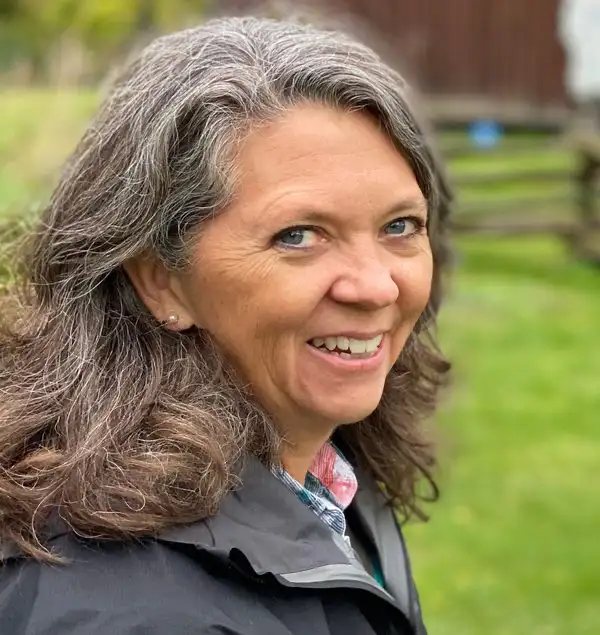
Clinical Director · Bilingual Clinical Psychologist
Dr. Lusk holds the Authority to Practice Interjurisdictional Telepsychology (APIT™) granted by the PSYPACT® Commission, which authorizes her to provide telepsychology to clients located in District of Columbia.
Dr. Lusk is a bilingual Licensed Clinical Psychologist and has practiced for more than twenty-five years. She read for her A.B. at Smith College and took her doctorate in Clinical Psychology at the California School of Professional Psychology–San Diego, a program accredited by the APA. District clients see her for individual, couples, family, and group therapy, in English or in Spanish; psychological evaluation is part of her practice too, and the parts of it that require in-person testing take place at our Flagstaff office.
Request an appointmentFull biographies, training, and areas of expertise are listed on our providers page. You can also read Dr. Lusk’s licensure and credentials in full. You are welcome to ask any clinician directly about their qualifications and experience.
The District of Columbia is one of the jurisdictions participating in PSYPACT®, the interstate arrangement governing telepsychology. Dr. Lusk holds the Authority to Practice Interjurisdictional Telepsychology (APIT™), issued by the PSYPACT® Commission, and that authority is what allows her to work from Arizona with someone sitting in the District. The Commission maintains the roster of participating jurisdictions, and our office will confirm your own situation before a first appointment is made.
The rule behind that is easy to state and easy to forget in a place of this size: an appointment is governed by where your body is, not by the address on your mail or the badge in your pocket. Joining from an office outside the District is a different matter from joining inside it, so tell us beforehand when a session is going to find you elsewhere, and we will check what is permitted there. A move raises the same question, and is much easier to settle early.
Participating jurisdictions are published by the compact commissions and can change. You can review current psychology participation at psypact.gov, find the relevant psychology licensing board through the PSYPACT® board directory, or check counseling privileges at CompactConnect. If you are not sure which applies to you, call (844) 774-7997 and we will confirm before you schedule.
We see students, faculty, and staff from Georgetown University, George Washington University, American University, Howard University, Gallaudet University, Catholic University of America, Trinity Washington University, and the University of the District of Columbia. Where a counseling office sits inside the same institution that grants your degree or signs your contract, a clinician with no connection to it is frequently the reason people look outside.
Our clients join from Washington, DC, and from neighborhoods including Georgetown, Capitol Hill, Dupont Circle, and Foggy Bottom. That list describes where people happen to sit at the appointed hour rather than any boundary on who may telephone us.
The range is wide: school-age children, teenagers, working adults, and people well into retirement, along with couples and whole households. Some people telephone with a clearly named difficulty; others simply know that a transition has stopped being manageable on its own. If what you need lies outside what this practice offers, we would rather say so at the outset and point you toward a more suitable service.
The one you are sitting in when the hour begins. Joining from a room in the District keeps the appointment authorized here. Joining from an office elsewhere is a separate question, and it is one we need to look at in advance rather than at the start of a session, so please tell the office when your Tuesday afternoons are going to be spent somewhere other than home.
A link reaches you in advance, and you open it at the appointed time from somewhere private. Your clinician begins by checking where you are joining from and what number to use if the picture fails, and the rest of the hour is conversation. All that is needed at your end is a closed door and a connection steady enough for video.
Dr. Lusk provides psychological evaluations, including educational, forensic, employment screening, and neuropsychological assessment. The choice of instruments follows the referral question, and so does the matter of what can sensibly be administered by video; both are settled in consultation before anything is scheduled. Our office can describe what an evaluation involves from beginning to end.
Only that the first conversation is with our office rather than with a clinician. Staff will take some basic details, ask what you are hoping to address, send the fee agreement, and answer any questions about out-of-network arrangements before an appointment is made. Nothing is committed to at that stage; the call exists so that you can decide with the relevant facts in hand.
To begin, request a time with Dr. Lusk in our secure online scheduler and tell us briefly what has brought you to look for help now. We will confirm that your appointments will be held inside the District, send the fee agreement, and confirm an hour your week can hold.
Prefer to talk first? Call or email the office.
Alabama Alaska Arizona Arkansas Colorado Connecticut Delaware Florida Georgia Hawaii Idaho Illinois Indiana Kansas Kentucky Louisiana Maine Maryland Michigan Minnesota Mississippi Missouri Montana Nebraska Nevada New Hampshire New Jersey North Carolina North Dakota Ohio Oklahoma Pennsylvania Rhode Island South Carolina South Dakota Tennessee Texas Utah Vermont Virginia Washington West Virginia Wisconsin Wyoming