
Anxiety
Worry that never quite switches off, treated with practical CBT so your days feel steadier.
Seniors facing illness or loss later in life talk with our psychologist by secure video from anywhere in South Carolina, and so do adults, couples, families, and parents of children and adolescents.
Currently accepting new clients
Request a South Carolina appointmentMuch of what comes to us from South Carolina involves a household rather than one person alone. A grandmother in Rock Hill may be helping to raise a grandchild, parents in Greenville may be unable to agree on how to handle a teenager, and a married couple in Charleston may be navigating the strain of caring for an aging father while holding down jobs. Video makes it possible to include the family members who are genuinely part of a situation, without asking four of them to be in one building at one hour.
The state is strung out along a diagonal as well, and the distance from Myrtle Beach to Clemson is not a morning's errand. Coastal communities fill and empty with the season, which affects what is available locally and when. Meeting by secure video means the practice you or your partner begin with in February is the same one you have in July, whatever the roads near the coast happen to be doing that week, and without an afternoon lost to traffic.
Six of the areas we are asked about most in South Carolina appear below. Your clinician will talk with you about whether a video format serves what you are dealing with.
Bereavement, anticipatory grief, and the strain on a family through a long final illness are all worked with here, including the practical conversations relatives keep putting off having with one another.
A child or teenager is seen with a guardian included in consent and planning. Meetings are shorter and more concrete for younger children, and a parent usually leaves with something specific to try that week.
Worry that has taken over the evenings is treated by examining what keeps it going and by rebuilding tolerance for what has been dropped, in a sequence you approve before any of it begins.
Living with pain or a long-term diagnosis wears down mood, sleep, and patience. Therapy takes on the suffering around the condition and runs, with your permission, alongside your medical care rather than in competition with it.
Partners are seen together to work on a conflict that never resolves, a rupture in trust, or the pressure that arrives with a new baby, a move, or an aging parent in the house.
A serious accident, an assault, or years of harm early in life can leave effects that outlast the event. Stabilization comes first, and a detailed account only when you have decided you are ready for it.
Whether you meet us by secure video or in person at our Flagstaff office, these are the concerns we most often help with.
Worry that never quite switches off, treated with practical CBT so your days feel steadier.
Low mood that drains interest and energy, met with patient, structured care that rebuilds one step at a time.
Careful, paced work for difficult experiences, with you in control of what you share and when.
Clear testing when you need answers, and practical coaching for the schedules and habits that follow.
Support through the first years on your own: school, work, independence, and the relationships that come with them.
For professionals running on empty: therapy for the exhaustion, and coaching for the work habits underneath it.
We take a family's arrangement seriously, and we go at a pace people can actually keep. Whether you are an undergraduate, an established professional, or an adult managing a household, we begin with a clear diagnostic picture. Where several relatives are involved, the clinician is explicit from the start about who the client is, what will be said in front of whom, and what a parent or an adult child will not be told. Our primary method is Cognitive Behavioral Therapy (CBT), applied deliberately over a course of months. Because we do not offer a quick fix, reviews happen out loud: after a stretch of sessions we ask directly whether this is worth continuing, and give our own view. Where someone needs a service this practice does not provide, we would rather help arrange it than hold the hour.
Psychological services for clients in this state are provided by one psychologist, which is part of why whole families can be seen together without the work being split among several members of staff.
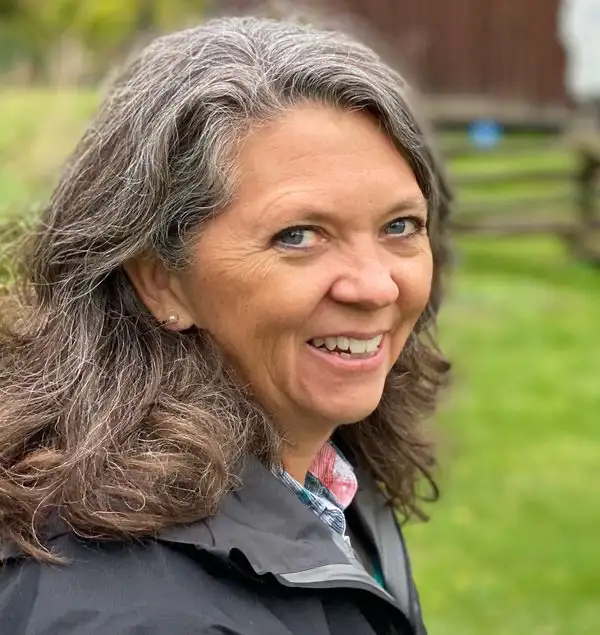
Clinical Director · Bilingual Clinical Psychologist
Dr. Lusk holds the Authority to Practice Interjurisdictional Telepsychology (APIT™) granted by the PSYPACT® Commission, which authorizes her to provide telepsychology to clients located in South Carolina.
The psychologist for South Carolina is Della S. Lusk, Ph.D., our clinical director, who has spent upward of twenty-five years in clinical practice. She sees adults on their own, couples together, and families across three generations when a situation calls for it, and she conducts psychological evaluations, including neuropsychological assessment where memory or cognition is the referral question. Her doctorate in clinical psychology comes from an APA-accredited program.
Request an appointmentFull biographies, training, and areas of expertise are listed on our providers page. You can also read Dr. Lusk’s licensure and credentials in full. You are welcome to ask any clinician directly about their qualifications and experience.
South Carolina is one of the states participating in PSYPACT®, the agreement that lets a psychologist holding interjurisdictional authority treat clients who are located in another participating state. Dr. Lusk works with people here on that footing. The authority sits with her rather than with any local office, and it makes no difference at all whether you live in a city with several psychologists or a county with none.
The one requirement it places on you concerns location. Her authority depends on your being in South Carolina at the hour of the appointment, so a week at a beach house over the line in another state is worth mentioning when we schedule. A relocation raises the same point, as does a student leaving for the fall. Where the destination participates too, the work can often continue; where it does not, we will help you find someone who can take it on.
Participating jurisdictions are published by the compact commissions and can change. You can review current psychology participation at psypact.gov, find the relevant psychology licensing board through the PSYPACT® board directory, or check counseling privileges at CompactConnect. If you are not sure which applies to you, call (844) 774-7997 and we will confirm before you schedule.
Students, faculty, and staff reach us from institutions across the state, among them Clemson University, the University of South Carolina, the College of Charleston, Coastal Carolina University, and The Citadel, along with private colleges such as Furman University, Wofford College, and Presbyterian College. A clinician with no role on campus is often easier to talk to, and video keeps the work going over breaks.
Appointments reach Charleston, Columbia, Greenville, Spartanburg, Rock Hill, Clemson, and Myrtle Beach, and plenty of places between them with no psychologist in town. What this format asks of you is a private room and a steady connection, not a particular address.
Yes, and a good deal of our work in this state involves more than one person in the room. Couples are seen together; a family session might bring in a teenager together with one parent or both, or an adult child with an elderly parent. Everyone taking part has to be in South Carolina at the time, which is worth planning if relatives are scattered.
They can, so long as a guardian is part of consent and of the plan. Younger children do better with shorter, more structured sessions and with a parent taking part in them. With adolescents, the clinician sets out at the beginning what she keeps confidential and what a parent will hear, since a teenager who does not trust that arrangement will not use the hour.
That is a common reason people here call us. For a wide range of concerns, therapy by video is a perfectly workable way to do this, and it removes the drive that had been the deciding obstacle. Where a situation needs in-person evaluation or local medical involvement, Dr. Lusk will say so and help you find it rather than press on regardless.
Mostly you talk and the clinician listens. She will ask what prompted the call now, what the background to it is, what has helped or failed to help before, and what you would like to be different. Consent, privacy, and what confidentiality does and does not cover are gone over as well, so that the shape of the work ahead is plain to you by the close of the hour.
Ring the office at (844) 774-7997 or send a message to info@psychotherapy.com. Staff will take down some details about the problem, send the fee agreement, go over out-of-network questions with you before anything is scheduled, and then offer appointment times. The clinical conversation itself begins at the first appointment rather than on that call.
Most people start by requesting a time in our secure online scheduler. Staff will confirm what a first appointment involves and which hours are open to South Carolina clients, and you can call (844) 774-7997 with any questions.
Prefer to talk first? Call or email the office.
Alabama Alaska Arizona Arkansas Colorado Connecticut Delaware District of Columbia Florida Georgia Hawaii Idaho Illinois Indiana Kansas Kentucky Louisiana Maine Maryland Michigan Minnesota Mississippi Missouri Montana Nebraska Nevada New Hampshire New Jersey North Carolina North Dakota Ohio Oklahoma Pennsylvania Rhode Island South Dakota Tennessee Texas Utah Vermont Virginia Washington West Virginia Wisconsin Wyoming


