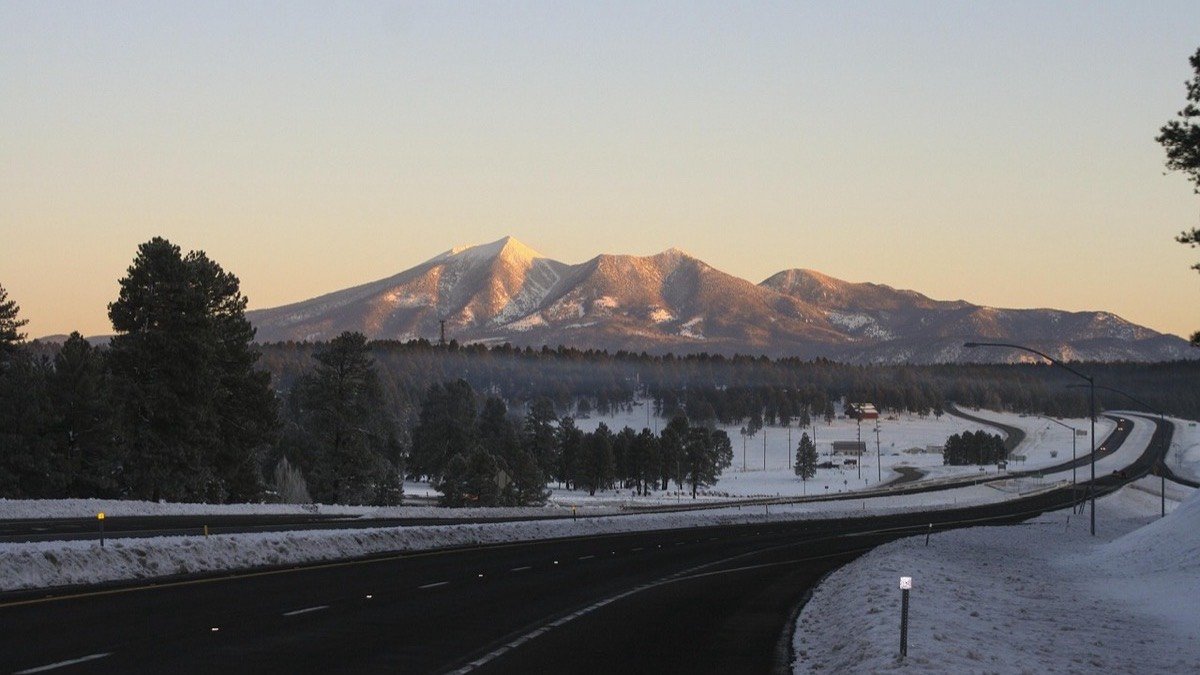
A Snowy Winter Ahead for Flagstaff and the Mountain West
Our corner of Arizona just made a national snow list. In a new forecast for Outside, meteorologist Jennifer Broome names Fort Valley, the small community just northwest of Flagstaff below Arizona Snowbowl, among the snowiest adventure towns to watch this winter. She expects a strong El Niño to steer storms across the southern tier of the country, with well-above-normal snow in the San Francisco Peaks and the heaviest snow likely in February.
Flagstaff isn't alone. The same forecast points to heavy snow in Colorado's San Juan Mountains around Telluride and Pagosa Springs and in Brian Head, Utah, and it flags Glacier, Washington, Stowe, Vermont, and Boone, North Carolina, as wild cards. Forecasts can change, but a snowy winter is a gift to skiers and to the water supply of the West. It can also be a long season. Short days, slick roads, and canceled plans add up, and for some people winter brings a low mood that is more than cabin fever.
Here is how to make the most of the snow, recognize when the winter blues have become something more, and keep your care going when the roads close.
The upside and the downside of a big snow season
A winter of heavy snow cuts both ways.
The upside. Mountain snowpack works like a savings account for water. The U.S. Geological Survey explains that winter snow is water in the bank: in the Rocky Mountains, snowmelt supplies 60 to 80 percent of the yearly water for more than 70 million people in the West. A deep snowpack also means a longer season for skiing, snowshoeing, and getting outside, which is good for body and mind.
The downside. Repeated storms bring real risks. The CDC's guidance on staying safe during and after a winter storm covers the big ones: heart strain from shoveling, carbon monoxide from generators and heaters, falls on ice, hypothermia, and power outages. Over a whole season, the quieter costs add up too: canceled plans, unpredictable commutes, school closures, and days spent indoors.
What this winter's forecast means where you live
We see clients by secure video across most of the country, including every state on this forecast where we practice. Here is a quick look, with a link to our page for each state.
- Arizona: Flagstaff and Fort Valley. Well-above-normal snow is expected on the San Francisco Peaks, with February likely the snowiest month. We see clients in person at our Flagstaff office and by video anywhere in Arizona.
- Colorado: Telluride and Pagosa Springs. The San Juan Mountains are favored for storms fed by atmospheric rivers. Online therapy in Colorado.
- Utah: Brian Head. The highest town in Utah sits in a sweet spot for this pattern, and its elevation helps the snow last. Online therapy in Utah.
- Washington: Glacier. Strong El Niño winters usually run warm here, but moist Pacific storms could bring local heavy snow near Mount Baker. Online therapy in Washington.
- Vermont: Stowe. A warmer, wetter outlook raises the chance of heavy, wet snow and late-winter nor'easters. Online therapy in Vermont.
- North Carolina: Boone. Extra Gulf moisture could mean a major winter storm in the Blue Ridge if cold air settles in. Online therapy in North Carolina.
Winter blues, or something more?
Most of us feel a little slower when the days are short. A few gray days after a storm, a weekend stuck indoors, or missing a sunny hike are normal parts of a mountain winter.
For some people, though, the change is bigger and comes back every year. The National Institute of Mental Health describes seasonal affective disorder as a type of depression with a recurring seasonal pattern, most often starting in late fall or early winter and lifting in spring. Signs of the winter pattern can include:
- Low mood most of the day, nearly every day
- Losing interest in things you usually enjoy
- Sleeping much more than usual and still feeling tired
- Craving carbohydrates, or eating more than usual
- Pulling away from friends and family, a kind of "hibernating"
- Trouble concentrating at work or school
The good news is that it is treatable. NIMH lists light therapy, talk therapy, antidepressant medication, and vitamin D as the main treatments, used alone or together. Cognitive Behavioral Therapy, the approach at the center of our practice, has been adapted specifically for seasonal depression. In research comparing the two, CBT and light therapy worked about equally well, and the benefits of CBT seemed to last longer over the following winters.
If your mood seems to follow the calendar, or if a hard winter has turned into something that will not lift, that is worth talking about. If you are ever thinking about harming yourself, call or text 988, or call 911.
Making the most of a snowy winter
Whether you live in Flagstaff or another snow town, a few habits help:
- Get outside in the morning light. Daylight early in the day helps set your body clock, and a walk, snowshoe, or ski counts. On a bluebird day after a storm, the light off fresh snow is a bonus.
- Keep your routine on snow days. Get up, get dressed, and eat at your usual times even when school or work is canceled. Structure protects sleep and mood.
- Plan connection ahead of time. Put a weekly coffee, game night, or call on the calendar so a stretch of storms doesn't turn into isolation.
- Move your body indoors too. Stretching, a home workout, or a trip to the gym fills the gap when roads are bad.
- Pace the shoveling. Light loads, frequent breaks, and help if you have heart concerns. Ask your doctor if you're unsure.
- Notice your pattern. If this is the third winter in a row you've felt flat from December to March, it is worth talking to a professional before the darkest weeks arrive.
When the roads close, your appointment doesn't have to
Snow days are one of the best arguments for virtual visits. When I-40, I-17, or Highway 180 is closed, or the plows haven't reached your street, you can meet your therapist by secure video from home. Arizona Behavioral Health Associates, P.C. offers in-person care at our Flagstaff office and telehealth through PSYPACT® and the Counseling Compact™ in more than 40 states. Because authorization follows where you are during each session, you can keep going if you head to Telluride or Boone for a ski week, as long as your clinician can practice in that state.
We use Cognitive Behavioral Therapy, which research supports for seasonal depression, to help with low mood, stress and burnout, and anxiety.
Ready to talk? Contact us, call (928) 774-7997, or find your state's telehealth page.
Source: These Will Be the Snowiest Adventure Towns This Winter, According to a Meteorologist, Outside, November 11, 2026.
This post shares general information and is not a substitute for professional care.