Teach Your Children Well: Why Each Generation Ages Better
In 1970, Crosby, Stills, Nash & Young released "Teach Your Children" on their album Déjà Vu. Graham Nash wrote it about the hard road between his own father and himself, and about what one generation hands the next. Its second verse turns the idea around: children have things to teach their parents, too. Years later, Nash put it simply in an interview, saying "we have to learn from our children, too".
More than fifty years on, a study published this week in Nature Medicine gives that song a scientific echo. What a society gives its children, it turns out, follows them all the way into old age.
What the study found
Researchers led by Anders Fjell, Professor of Psychology at the University of Oslo, analyzed memory tests from around 219,000 people in Europe and the United States, some followed for nearly 30 years. Because the same people were tested again and again, the team could separate two questions: how well each generation remembers when it reaches older age, and how quickly that memory declines.
The answer to both was encouraging. Each generation born over the past decades has entered old age with better memory than the one before it, and has lost that memory more slowly. The researchers report that the difference is large enough to explain the drop in dementia risk seen in Europe and the United States, estimated at around 13 percent per decade. Put simply, dementia is not disappearing, but for later generations it tends to arrive later.
Where the gains came from
The study compares whole generations, so it cannot say exactly why each one has fared better. The researchers point to the broad changes of the 20th century: more years of schooling, better nutrition, healthier conditions during pregnancy and childhood, and better health care. Through adulthood, heart and metabolic health also appear to help slow memory decline, and factors such as better blood pressure treatment and cleaner air may have played a part.
In other words, much of a person's memory in their eighties was being built in their first years of life, and then protected along the way.
A song about teaching in both directions
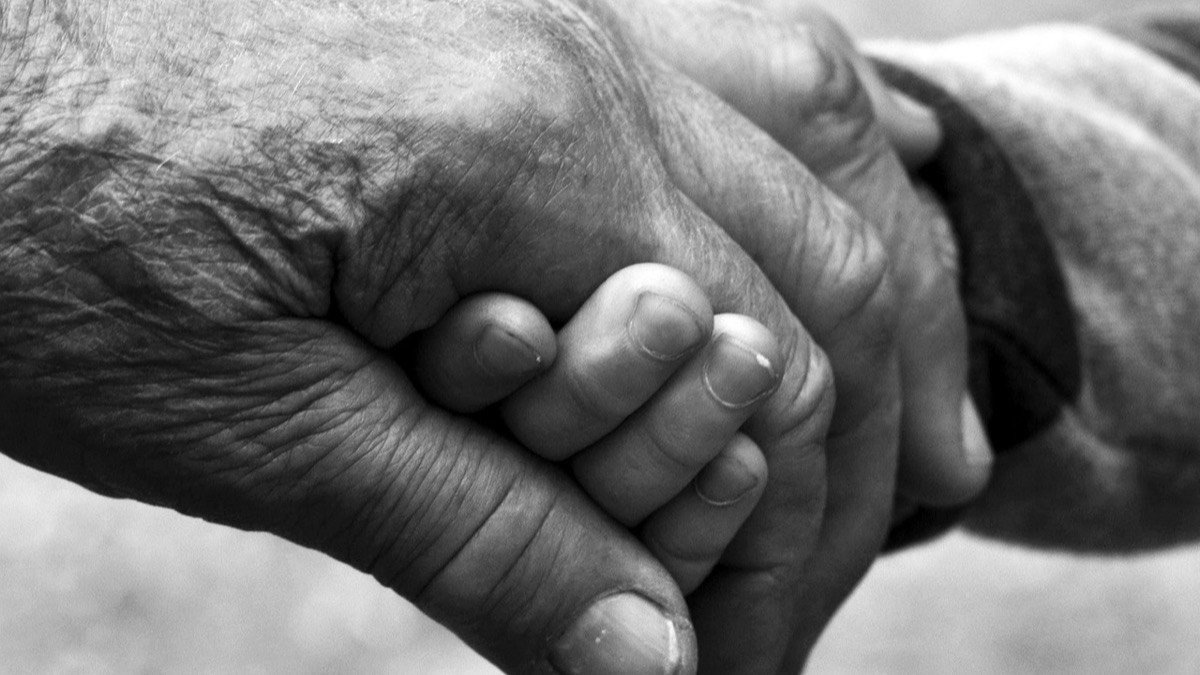
This is where the song fits. Parents, grandparents, and communities pass on far more than they know: the stability of a home, a love of reading, encouragement at school, a meal on the table, a doctor's visit when one is needed. The study suggests those gifts keep paying out for decades.
The song's second verse fits too. Changes like more schooling for more children, new ideas about health, and cleaner air did not happen on their own; people of every age had to ask for them and learn to live by them. Each generation teaches the one before it as well as the one after.
Optimism, with a caution
Professor Fjell describes the findings as grounds for hope. The risk of dementia at a given age is not fixed; it has fallen because of conditions a society can change. He also notes that there is no guarantee the trend will continue. Today's children and young adults face different conditions, and trends in physical activity, weight, and inequality do not all point in a good direction. The researchers stress that brain health in old age is built across a whole life, and that this is a shared task for society, not only an individual responsibility. Because the study looks at generations rather than individuals, they do not offer personal advice based on it.
What this can mean for your family
For parents, the study is a reminder that the everyday work of raising children matters, even when its rewards are decades away. For adult children caring for aging parents, it offers a little perspective: your parents may be aging differently, and often better, than their own parents did. And for everyone in between, it is a good reason to keep learning from the generations on both sides of us.
Family life across generations is not always easy. If you are a parent working through a hard season, an adult child caring for an aging parent, or someone worried about changes in memory, we are glad to help. Contact us to talk about parenting and family support or a psychological evaluation.
You can watch "Teach Your Children" by Crosby, Stills, Nash & Young in its official music video.
Source: Generational gains in cognitive capacity and dementia incidence rates in Western countries, Fjell et al., Nature Medicine, November 17, 2026. Reported in Newer generations show better memory and slower cognitive decline, News-Medical, November 17, 2026.
This post shares general information and is not a substitute for professional care.