Two Epics, One Journey Home: The Odyssey and the Ramayana
When Christopher Nolan's The Odyssey filled IMAX screens this summer, we wrote about the format itself and what its scale might teach us about therapy. This month a second ancient epic arrived on those same enormous screens. The pairing has us thinking less about the screens than about the stories, and about why people have kept telling them for more than two thousand years.
Two old stories on the largest screens
Nolan's film opened in July with Matt Damon as Odysseus. As TheWrap reported, it is the first feature shot entirely with IMAX film cameras. In early November, timed to Diwali, Ramayana: Rise of a Legend opened in IMAX and 3D, in Hindi and English. The Hollywood Reporter India reported that Nitesh Tiwari directed it, with Ranbir Kapoor as Rama and Yash as Ravana, and that a second part is planned for 2027. Months before the release, according to Bollywood Hungama, IMAX's chief content officer, Jonathan Fischer, called it "the most anticipated global film this year."
The two poems behind these films come from different languages and different worlds. The Odyssey is read today mostly as literature. The Ramayana is also sacred to many Hindus, a story that is prayed and performed as well as read. Underneath the battles and the spectacle, though, the two tell of the same thing: a long journey home.
The same shape: leaving, enduring, returning
Odysseus spends ten years finding his way back to Ithaca after the Trojan War, while his wife, Penelope, holds their household together and waits. Rama, a prince, accepts fourteen years of exile to honor his father's word. He loses his wife, Sita, to the demon king Ravana, wins her back, and returns at last to the city of Ayodhya. The details differ in nearly every way, yet anyone who knows one story will recognize the outline of the other.
The writer Joseph Campbell called that outline the hero's journey: a departure, an ordeal, and a return by someone who has been changed along the way. Campbell's idea is a way of reading stories, not a clinical finding. It is useful here because the pattern often resembles an ordinary life: leaving a family home, enduring a loss or a hard season, longing for what was, and coming back to find that both the place and the person are different.
When longing for home was an illness
The Greeks called the homecoming at the heart of the Odyssey nostos. Joined to their word for pain, it gave us "nostalgia," the ache for home. As the psychologist Clay Routledge recounted in Scientific American, a Swiss physician named Johannes Hofer coined the term in the late seventeenth century for what he considered a disease of Swiss soldiers fighting far from home. For a long time afterward, longing for home was treated as something to be cured.
Psychologists now tend to see it differently. In the studies Routledge described, people who were asked to reflect on nostalgic memories reported a stronger sense of connection to others and a greater sense that life is meaningful. Odysseus and Rama are both sustained by the memory of where they belong. Remembering home can be part of what carries a person through.
Two answers to the same question
Both epics ask how a person endures a long separation and comes home whole, and each leans toward its own answer. The Greek answer is resourcefulness. Odysseus survives by his wits, by patience, and by refusing to forget where he is going. Even then, his arrival is a test of its own. He comes home disguised as a beggar and has to be recognized, slowly, by the people who love him. Anyone who has returned from a deployment, a long illness, or a season of grief may know that part of the story well. Coming home is its own work, because the person who returns is not quite the person who left.
The Ramayana's answer is dharma: duty, devotion, and right conduct. Rama is remembered less for cleverness than for doing what is right when it is costly, and the loyalty of those around him carries much of the story. His return matters because of how he conducted himself while he was away, so the homecoming restores an order as well as a household. Most long separations ask for some of each: the resourcefulness to keep going, and the values that make the return worth having.
Diwali: a community lights the way home
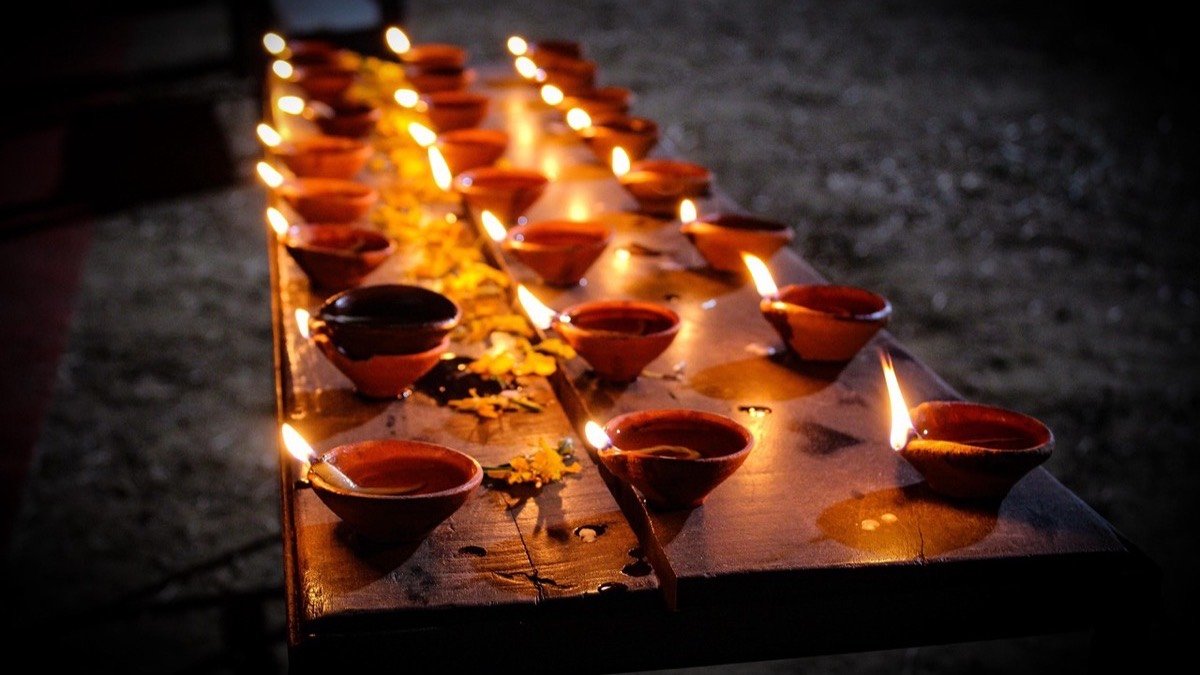
Diwali, which fell on November 8 this year, is where the Ramayana's ending becomes something people do and not only something they watch. The festival's best-known story is Rama's return to Ayodhya, when the people of the city set out rows of small clay lamps to welcome him. Its other name, Deepavali, means "a row of lamps." Each autumn, millions of families light those lamps again.
The homecoming in that image does not belong to the hero alone. A whole community prepares for it and guides the traveler in. The Odyssey has its own version in Penelope's long waiting, because a return usually needs someone who has kept a place for it. Ritual, belonging, and being welcomed matter to how people feel, and these stories have lasted partly because they speak to that need. A journey home is rarely finished by the traveler alone.
Therapy can be, in a modest sense, a journey home as well: a way back toward a sense of who you are after a time of leaving, enduring, or simply feeling far from yourself. We are a boutique practice based in Flagstaff, Arizona, and we see clients by secure video in more than 40 states. If these stories have stirred something in you, we invite you to reach out to our office, or to browse our resources at your own pace.
Sources: Ramayana: Part 1 Officially Titled Ramayana: Rise of a Legend, IMAX 3D Diwali Release Set, The Hollywood Reporter India, September 29, 2026. IMAX chief calls Namit Malhotra's Ramayana: Part 1 "the most anticipated global film this year", Bollywood Hungama, January 30, 2026. Christopher Nolan's 'The Odyssey' Will Be the First Movie Shot Entirely With Imax Film Cameras, TheWrap, May 15, 2025. The Rehabilitation of an Old Emotion: A New Science of Nostalgia, Scientific American, July 10, 2013.
This post shares general information and is not a substitute for professional care.